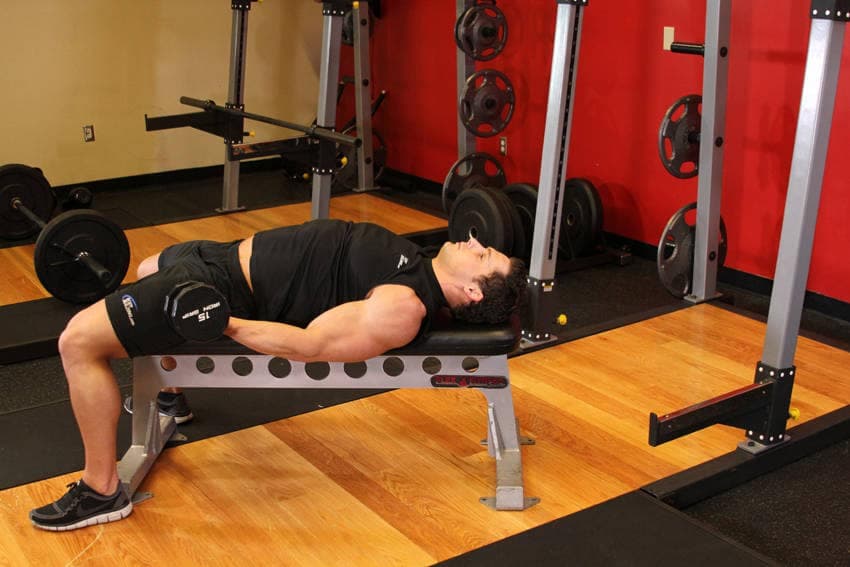
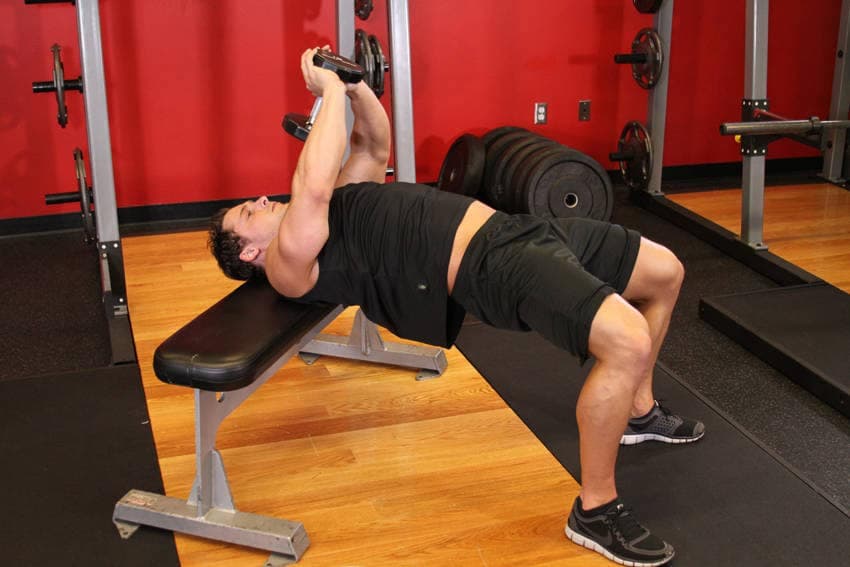
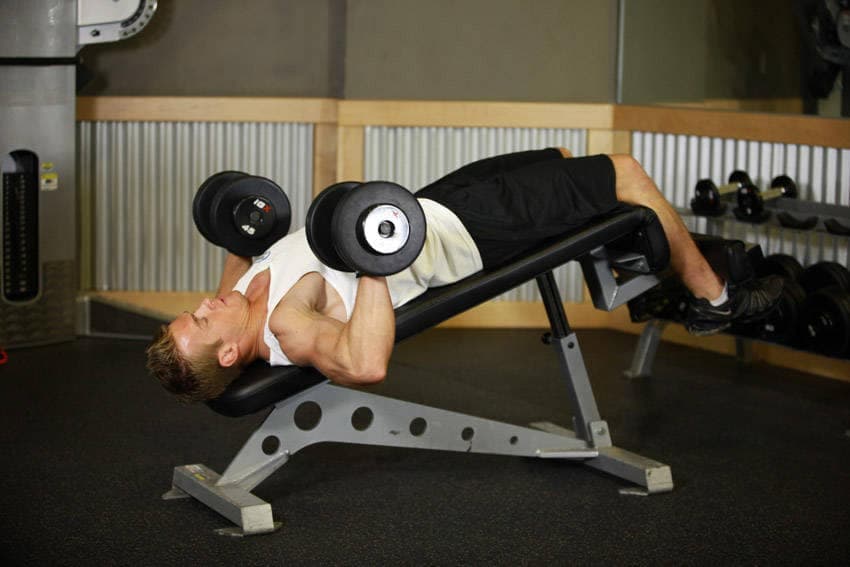
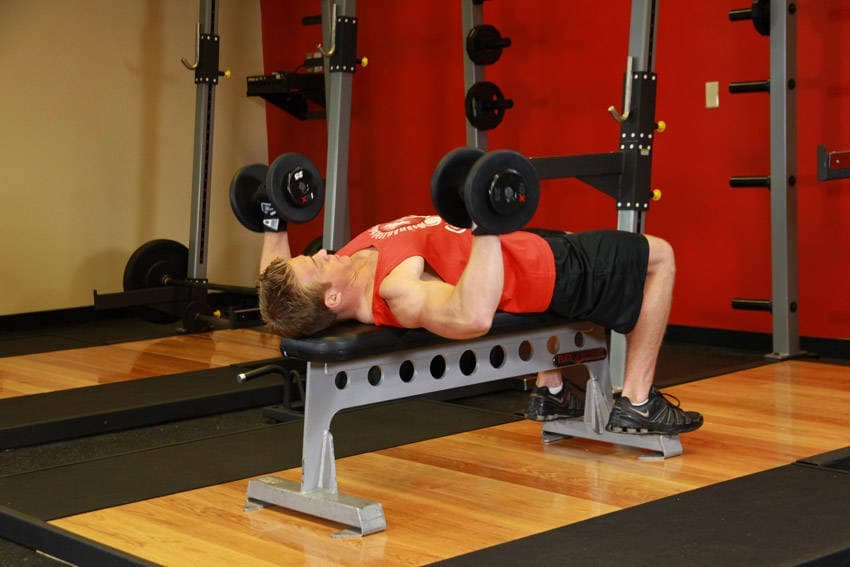
Movement sequence02 frames
The Qantra note
Make the next session comparable
Compare weight and repetitions with a similar bench angle and comfortable range of motion. Note it when either changes.
Log the actual load, completed sets, repetitions and set effort. A heavier set with fewer reps is a different result, not automatically progress.
Exercise instructions
Original English instructions from free-exercise-db.
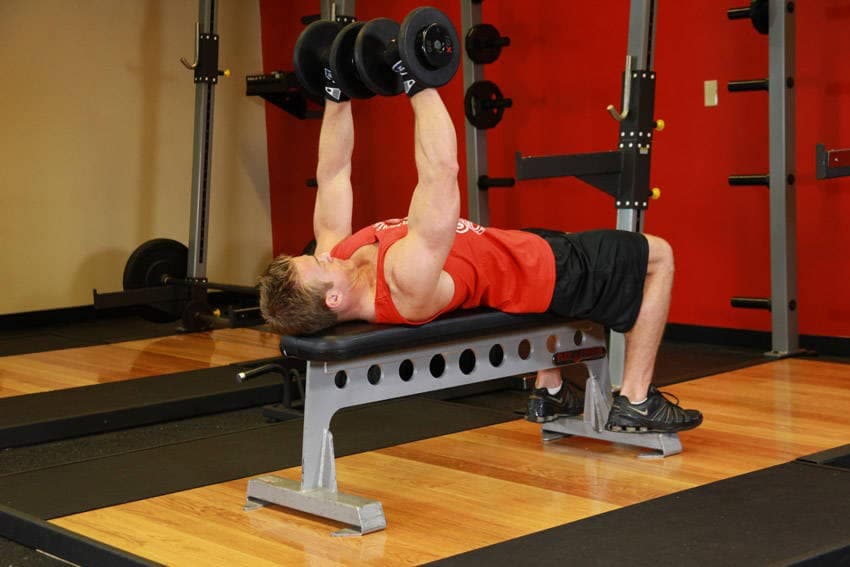
- Lie down on a flat bench with a dumbbell in each hand resting on top of your thighs. The palms of your hands will be facing each other.
- Then, using your thighs to help raise the dumbbells up, lift the dumbbells one at a time so that you can hold them in front of you at shoulder width.
- Once at shoulder width, rotate your wrists forward so that the palms of your hands are facing away from you. The dumbbells should be just to the sides of your chest, with your upper arm and forearm creating a 90 degree angle. Be sure to maintain full control of the dumbbells at all times. This will be your starting position.
- Then, as you breathe out, use your chest to push the dumbbells up. Lock your arms at the top of the lift and squeeze your chest, hold for a second and then begin coming down slowly. Tip: Ideally, lowering the weight should take about twice as long as raising it.
- Repeat the movement for the prescribed amount of repetitions of your training program.
Muscle groups
Primary: Chest
Secondary: Shoulders, Triceps
Choose a load and range of motion that suit you. The library is not an individual assessment of what you should train.
Images and instructions: free-exercise-db, available under Unlicense.
Understand set effort and session load →
Open training app