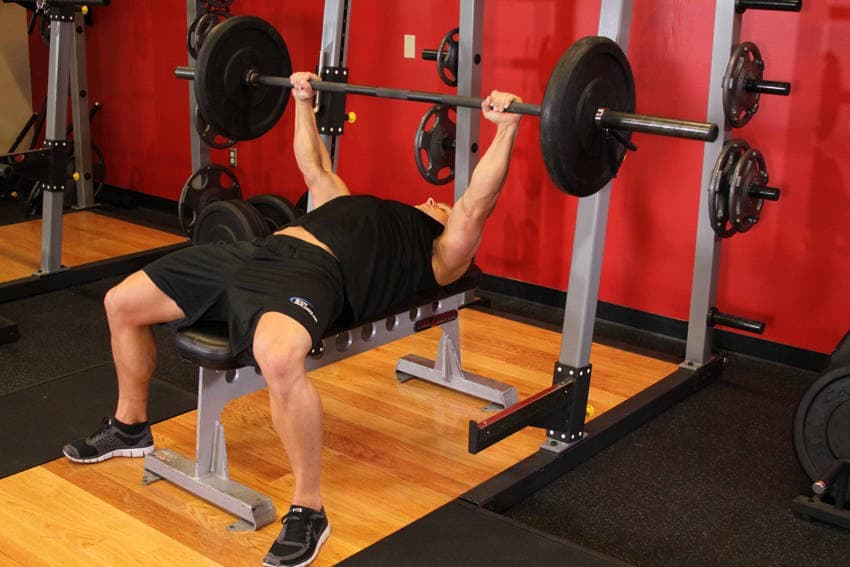
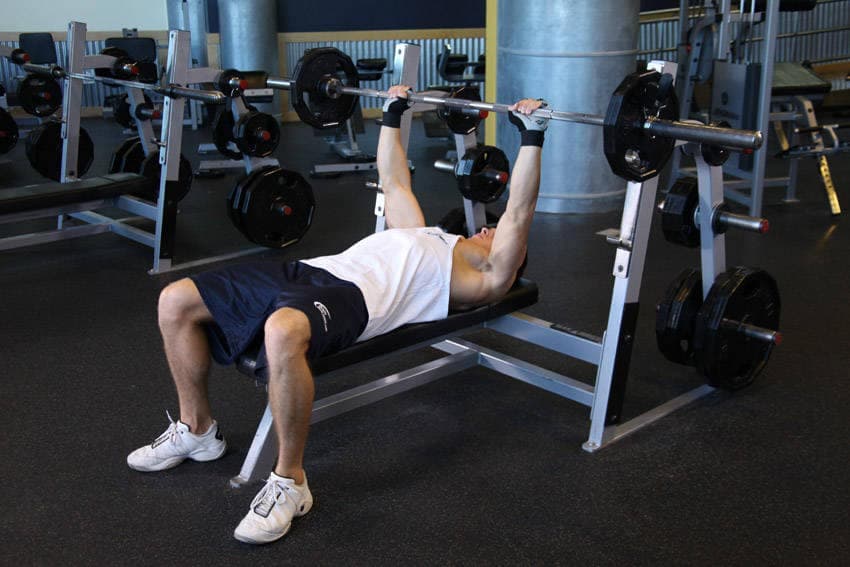
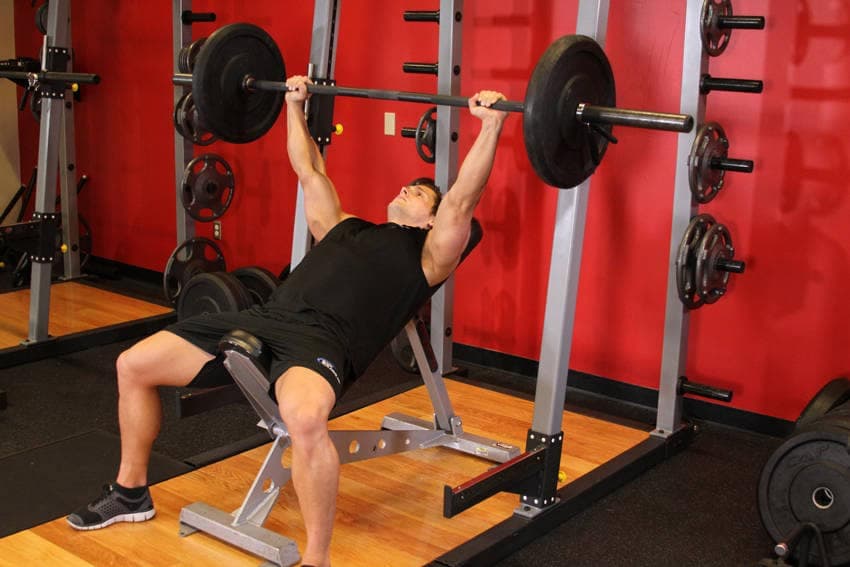
Movement sequence02 frames
The Qantra note
Make the next session comparable
For chest-focused work, body position and range make a better baseline than load alone.
Log the actual load, completed sets, repetitions and set effort. A heavier set with fewer reps is a different result, not automatically progress. The incline or decline is part of this variation; note it if you change the setup. Grip is part of this variation; note a change before comparing loads.
Exercise instructions
Original English instructions from free-exercise-db.
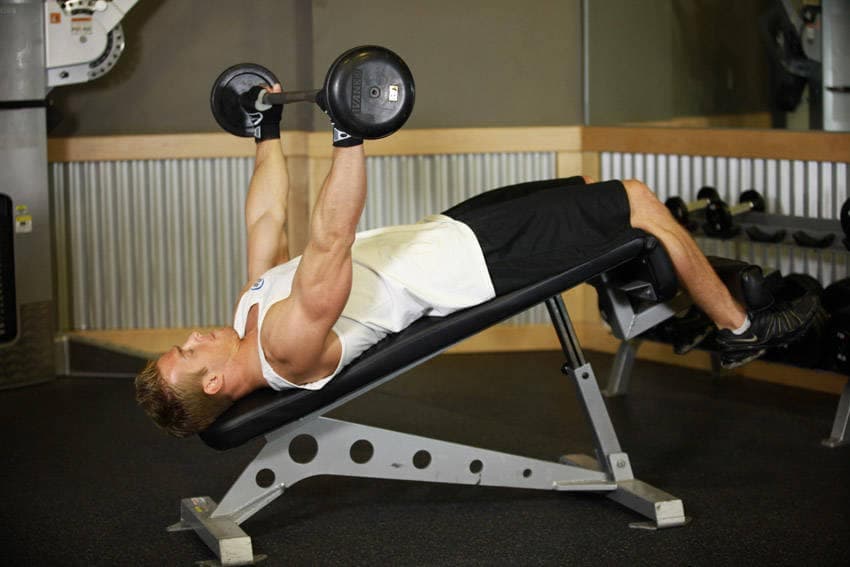
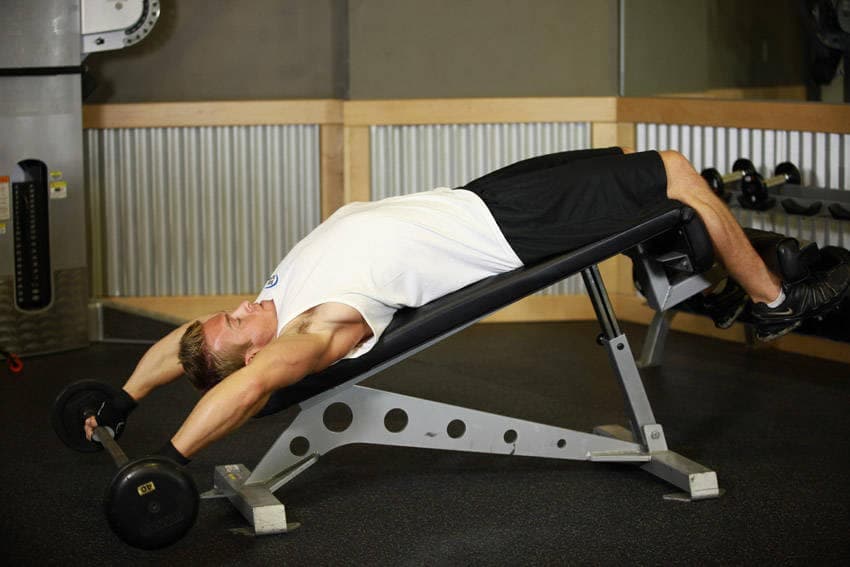
- Lie down on a decline bench with both legs securely locked in position. Reach for the barbell behind the head using a pronated grip (palms facing out). Make sure to grab the barbell wider than shoulder width apart for this exercise. Slowly lift the barbell up from the floor by using your arms.
- When positioned properly, your arms should be fully extended and perpendicular to the floor. This is the starting position.
- Begin by moving the barbell back down in a semicircular motion as if you were going to place it on the floor, but instead, stop when the arms are parallel to the floor. Tip: Keep the arms fully extended at all times. The movement should only happen at the shoulder joint. Inhale as you perform this portion of the movement.
- Now bring the barbell up while exhaling until you are back at the starting position. Remember to keep full control of the barbell at all times.
- Repeat the movement for the prescribed amount of repetitions of your training program.
- When finished with your set, slowly lower the barbell back down until it is level with your head and release it.
Muscle groups
Primary: Chest
Secondary: Shoulders, Triceps
Choose a load and range of motion that suit you. The library is not an individual assessment of what you should train.
Images and instructions: free-exercise-db, available under Unlicense.
Understand set effort and session load →
Open training app