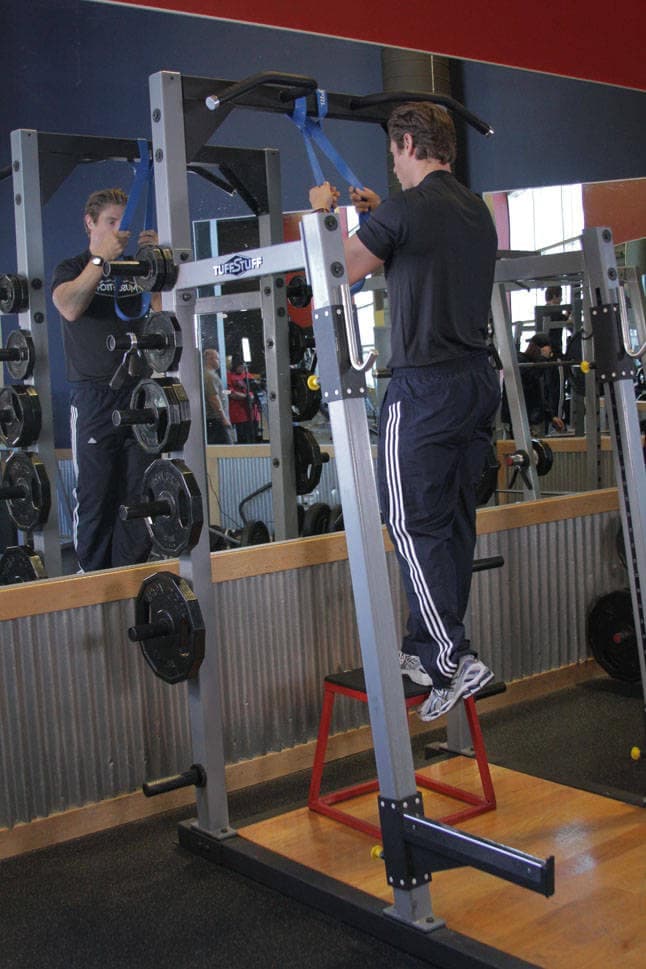
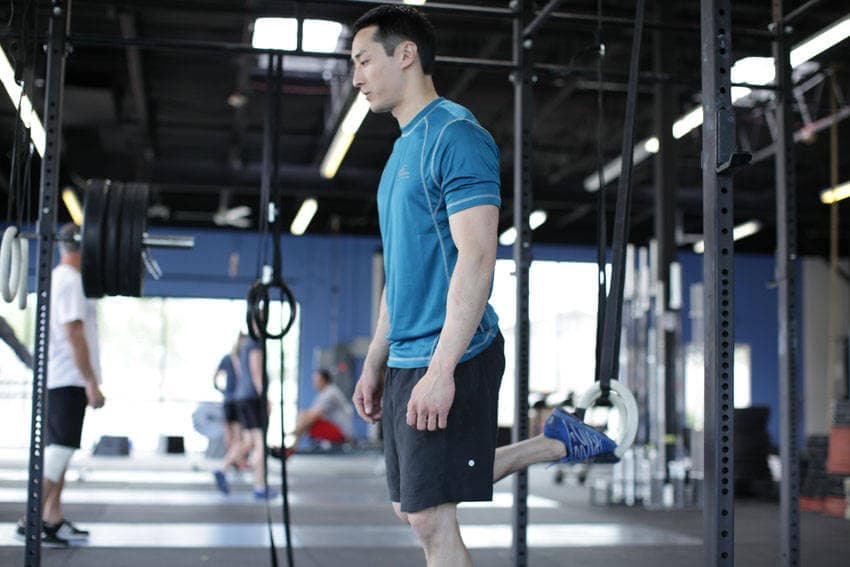
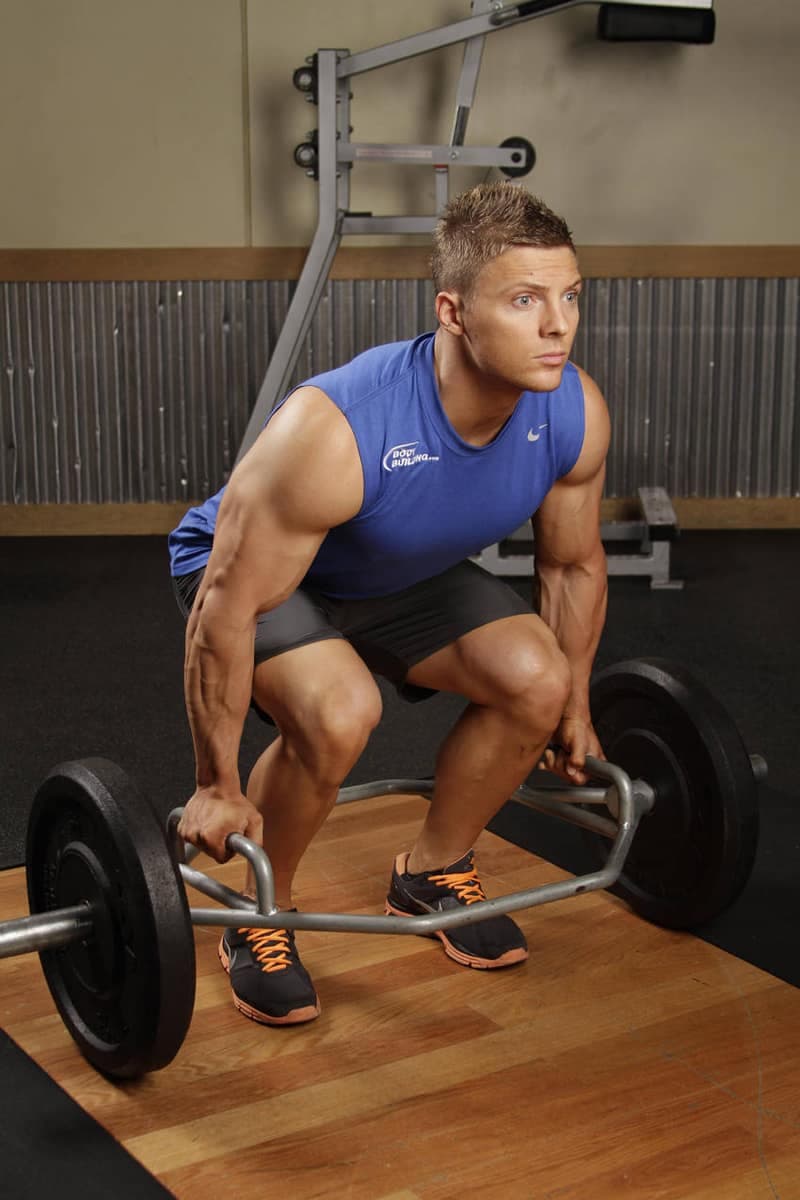
Movement sequence02 frames
The Qantra note
Make the next session comparable
A squat is easier to compare when stance and comfortable depth are similar from session to session.
Log completed sets, repetitions and effort. Describe the implement or support if it changed from last time.
Exercise instructions
Original English instructions from free-exercise-db.
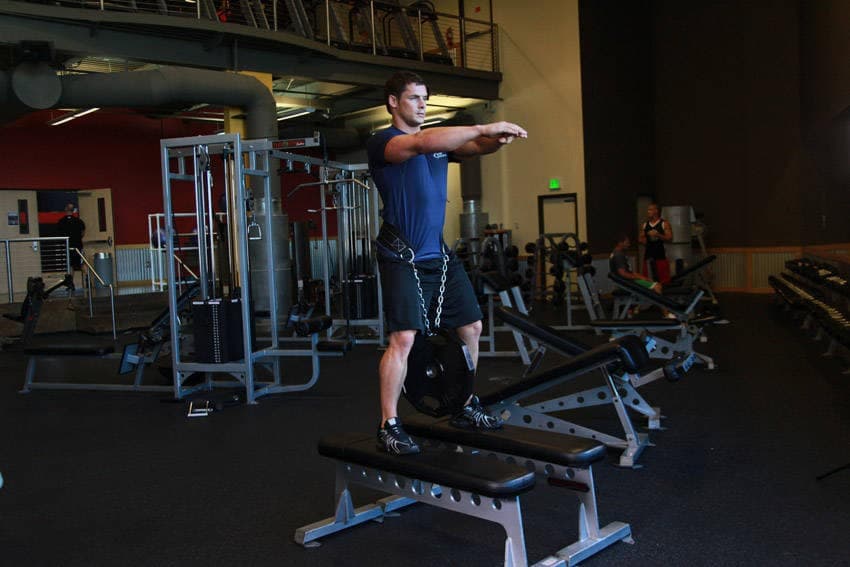
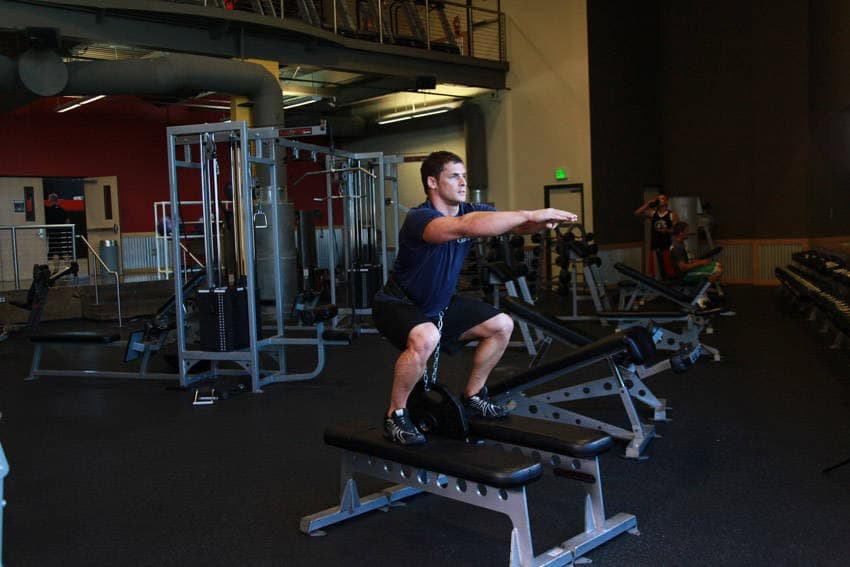
- Start by positioning two flat benches shoulder width apart from each other. Stand on top of them and wrap the weighted belt around your waist with the amount of weight you feel comfortable with. Make sure your toes are facing out.
- Once you are standing straight up with the weight hanging in between your legs, position your arms so that they are fully extended to the side of your body. This is the starting position.
- Begin by bending the knees as you maintain a straight posture with the head up. Continue down until the angle between the upper leg and the calves becomes slightly less than 90-degrees (which is the point in which the upper legs are below parallel to the floor). Inhale as you perform this portion of the movement. Tip: If you performed the exercise correctly, the front of the knees should make an imaginary straight line with the toes that are perpendicular to the front. If your knees are past that imaginary line (if they are past your toes) then you are placing undue stress on the knee and the exercise has been performed incorrectly.
- Begin to move the body back up by pushing the floor of the flat bench with the ball of your foot mainly as you straighten the legs again and go back to the starting position. Exhale as you perform this portion of the exercise.
- Repeat for the recommended amount of repetitions.
Muscle groups
Primary: Quadriceps
Secondary: Calves, Glutes, Hamstrings
Choose a load and range of motion that suit you. The library is not an individual assessment of what you should train.
Images and instructions: free-exercise-db, available under Unlicense.
Understand set effort and session load →
Open training app