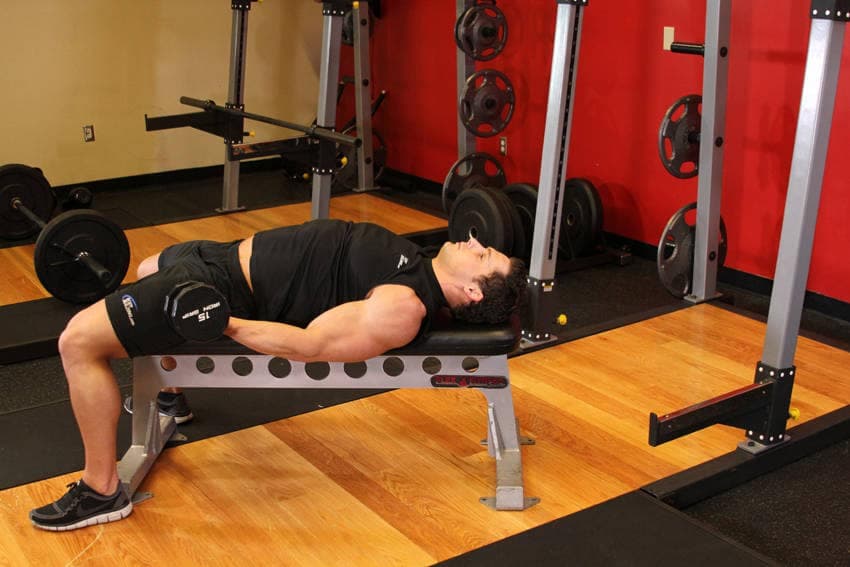
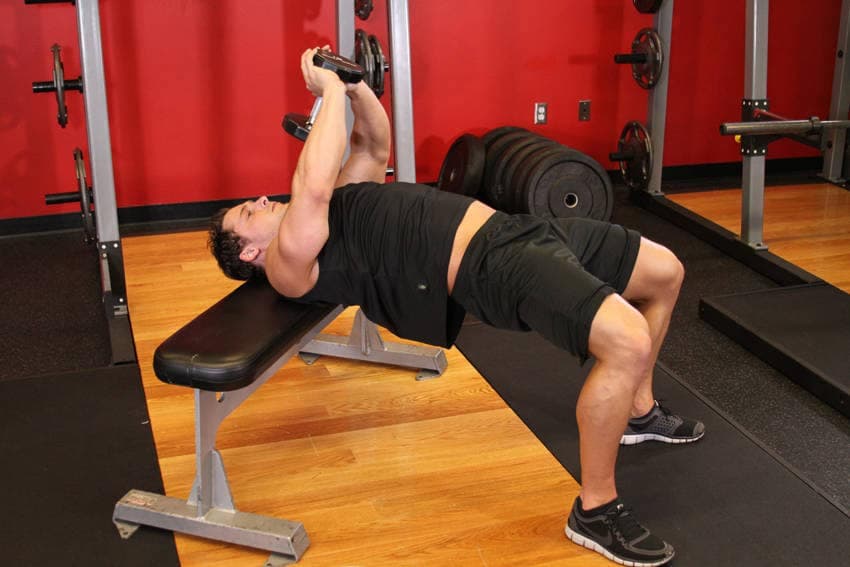
Movement sequence02 frames
The Qantra note
Make the next session comparable
For chest-focused work, body position and range make a better baseline than load alone.
Log the actual load, completed sets, repetitions and set effort. A heavier set with fewer reps is a different result, not automatically progress.
Exercise instructions
Original English instructions from free-exercise-db.
- Place a dumbbell standing up on a flat bench.
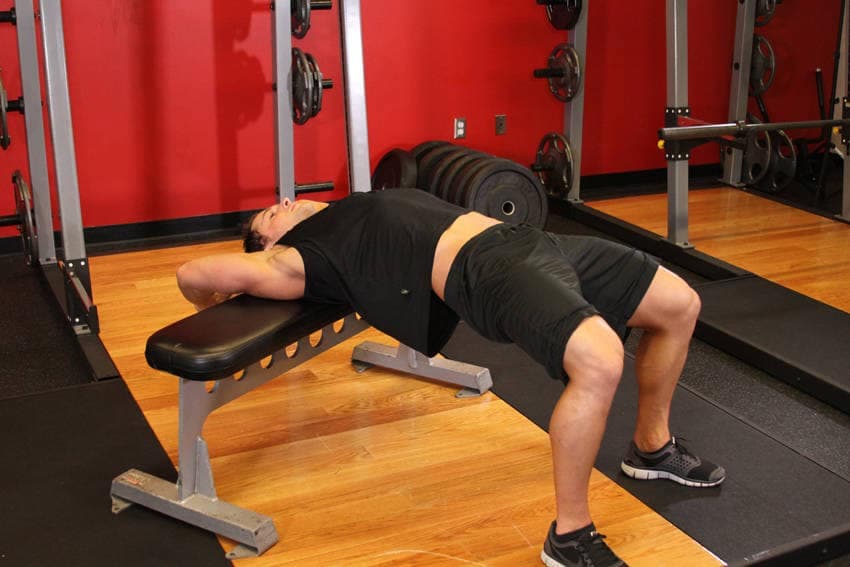
- Ensuring that the dumbbell stays securely placed at the top of the bench, lie perpendicular to the bench (torso across it as in forming a cross) with only your shoulders lying on the surface. Hips should be below the bench and legs bent with feet firmly on the floor. The head will be off the bench as well.
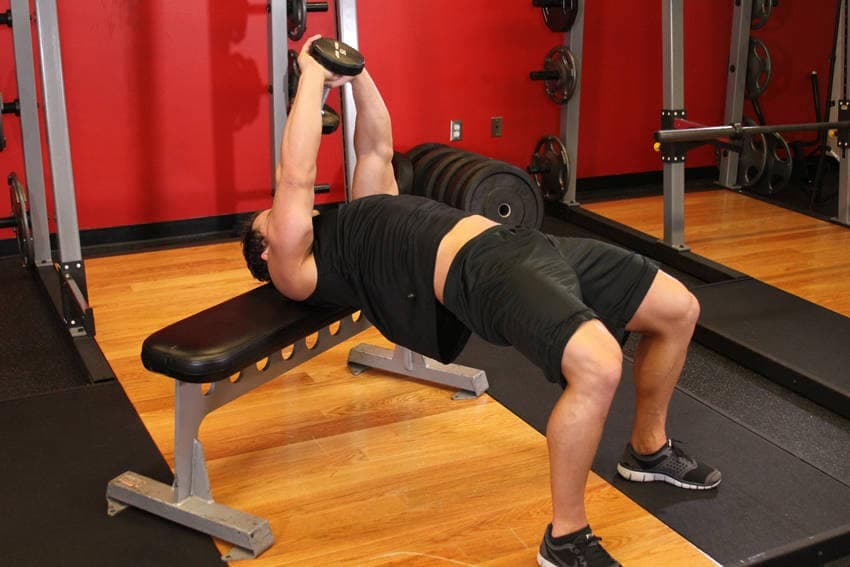
- Grasp the dumbbell with both hands and hold it straight over your chest at arms length. Both palms should be pressing against the underside one of the sides of the dumbbell. This will be your starting position. Caution: Always ensure that the dumbbell used for this exercise is secure. Using a dumbbell with loose plates can result in the dumbbell falling apart and falling on your face.
- While keeping your arms straight, lower the weight slowly in an arc behind your head while breathing in until you feel a stretch on the chest.
- At that point, bring the dumbbell back to the starting position using the arc through which the weight was lowered and exhale as you perform this movement.
- Hold the weight on the initial position for a second and repeat the motion for the prescribed number of repetitions.
Muscle groups
Primary: Chest
Secondary: Lats, Shoulders, Triceps
Choose a load and range of motion that suit you. The library is not an individual assessment of what you should train.
Images and instructions: free-exercise-db, available under Unlicense.
Understand set effort and session load →
Open training app