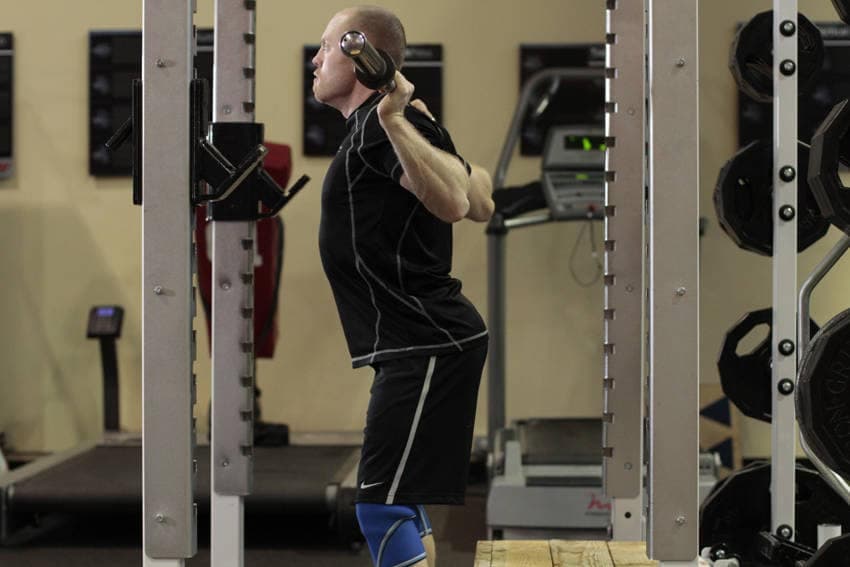
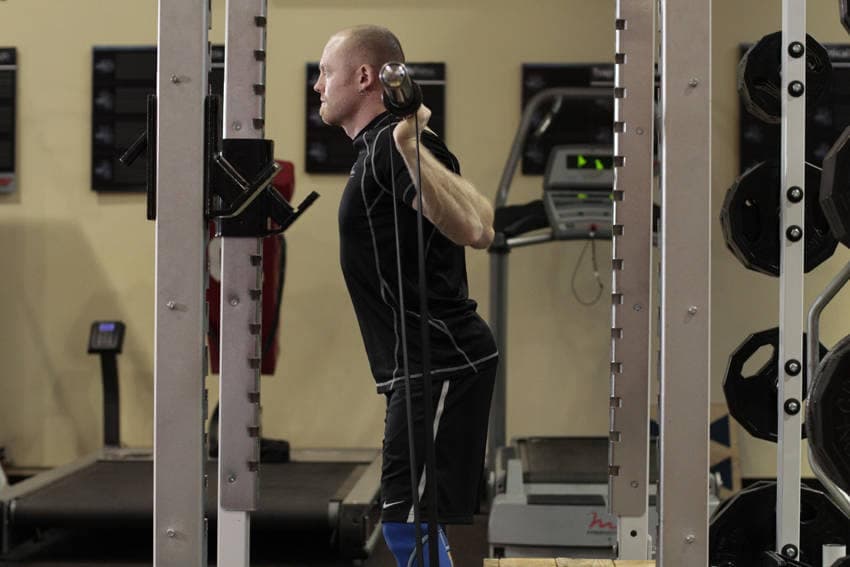
Movement sequence02 frames
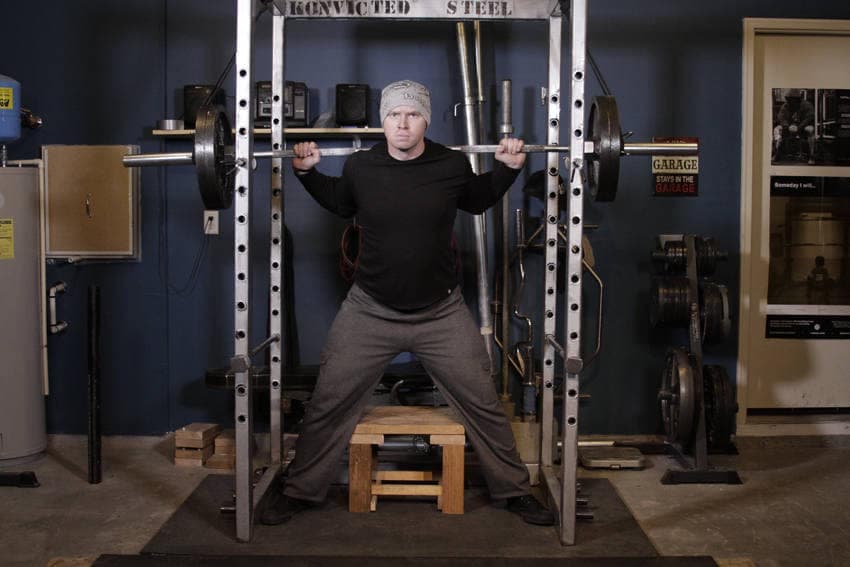
The Qantra note
Make the next session comparable
A squat is easier to compare when stance and comfortable depth are similar from session to session.
Log the actual load, completed sets, repetitions and set effort. A heavier set with fewer reps is a different result, not automatically progress.
Exercise instructions
Original English instructions from free-exercise-db.
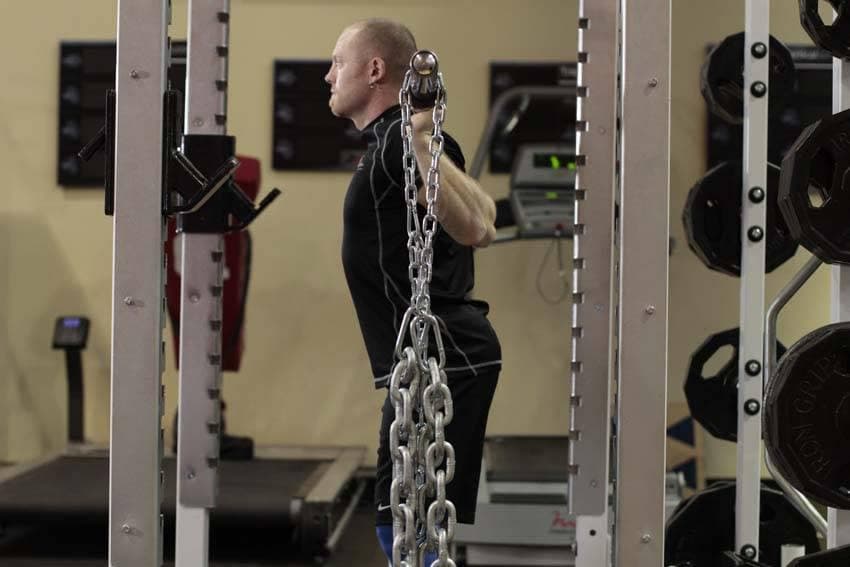
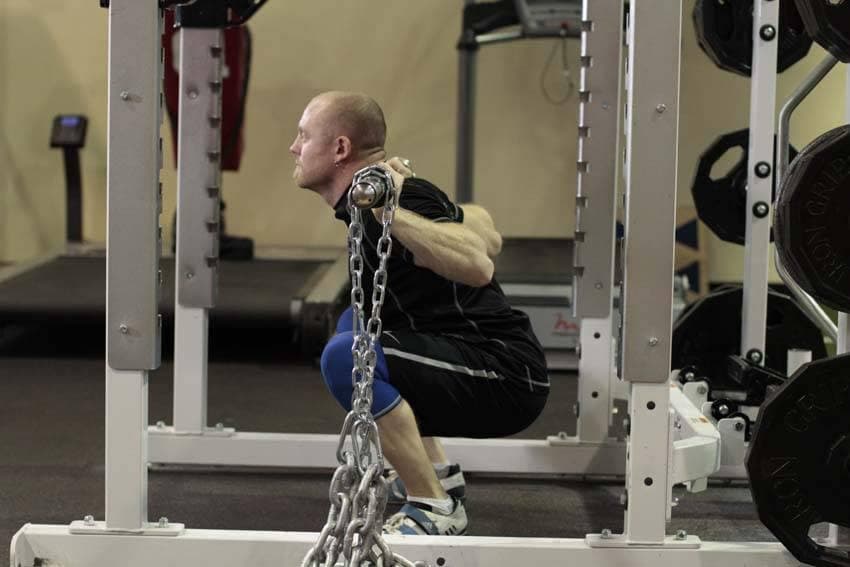
- To set up the chains, begin by looping the leader chain over the sleeves of the bar. The heavy chain should be attached using a snap hook. Adjust the length of the lead chain so that a few links are still on the floor at the top of the movement.
- Begin by stepping under the bar and placing it across the back of the shoulders. Squeeze your shoulder blades together and rotate your elbows forward, attempting to bend the bar across your shoulders. Remove the bar from the rack, creating a tight arch in your lower back, and step back into position. Place your feet wide for more emphasis on the back, glutes, adductors, and hamstrings. Keep your head facing forward.
- With your back, shoulders, and core tight, push your knees and butt out and you begin your descent. Sit back with your hips as much as possible. Ideally, your shins should be perpendicular to the ground. Lower bar position necessitates a greater torso lean to keep the bar over the heels. Continue until you break parallel, which is defined as the crease of the hip being in line with the top of the knee.
- Keeping the weight on your heels and pushing your feet and knees out, drive upward as you lead the movement with your head. Continue upward, maintaining tightness head to toe, until you have returned to the starting position.
Muscle groups
Primary: Quadriceps
Secondary: Adductors, Calves, Glutes, Hamstrings, Lower back
Choose a load and range of motion that suit you. The library is not an individual assessment of what you should train.
Images and instructions: free-exercise-db, available under Unlicense.
Understand set effort and session load →
Open training app