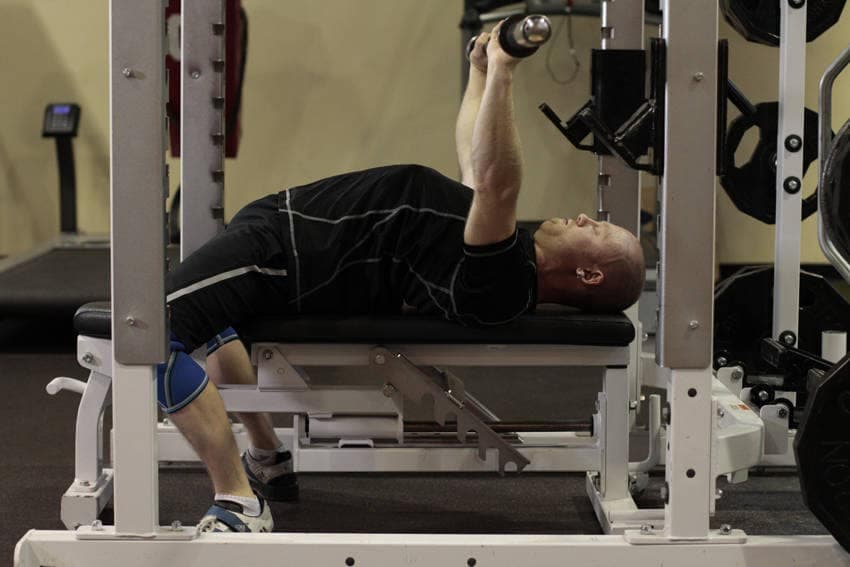
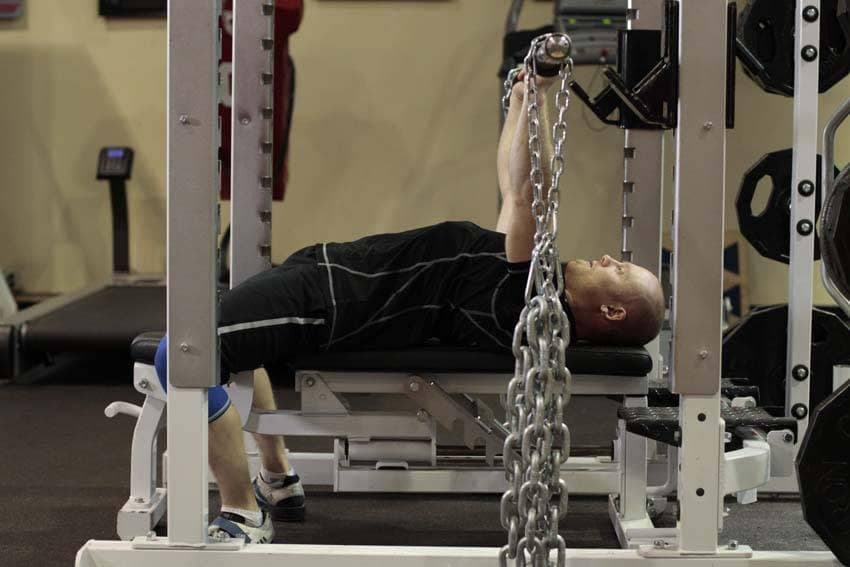
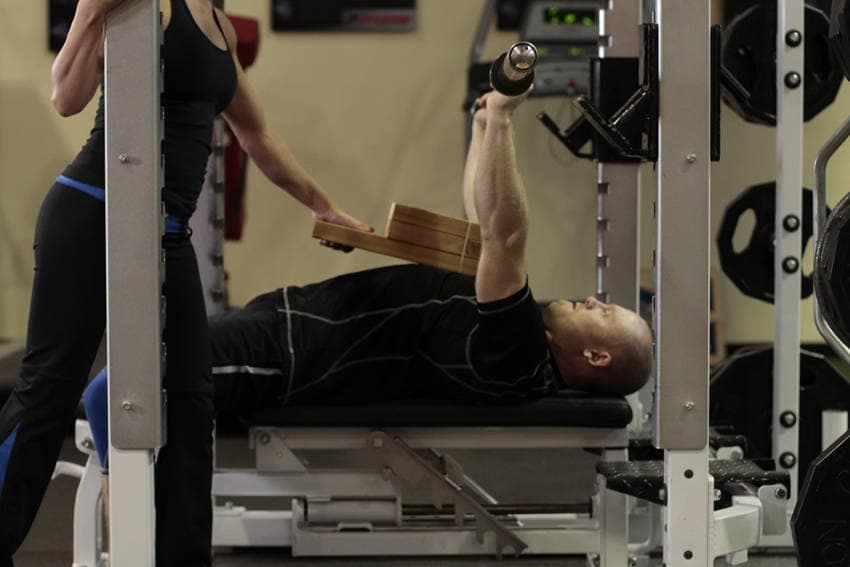
Movement sequence02 frames
The Qantra note
Make the next session comparable
For a press, compare completed repetitions with a similar setup and range before judging the result.
Log the actual load, completed sets, repetitions and set effort. A heavier set with fewer reps is a different result, not automatically progress.
Exercise instructions
Original English instructions from free-exercise-db.
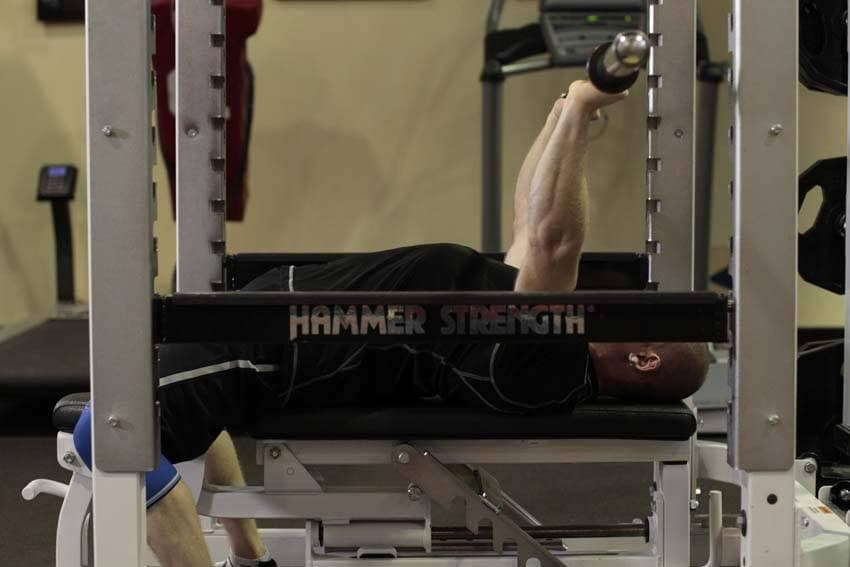
- Pin presses remove the eccentric phase of the bench press, developing starting strength. They also allow you to train a desired range of motion.
- The bench should be set up in a power rack. Set the pins to the desired point in your range of motion, whether it just be lockout or an inch off of your chest. The bar should be moved to the pins and prepared for lifting.
- Begin by lying on the bench, with the bar directly above the contact point during your regular bench. Tuck your feet underneath you and arch your back. Using the bar to help support your weight, lift your shoulder off the bench and retract them, squeezing the shoulder blades together. Use your feet to drive your traps into the bench. Maintain this tight body position throughout the movement.
- You can take a standard bench grip, or shoulder width to focus on the triceps. The bar, wrist, and elbow should stay in line at all times. Focus on squeezing the bar and trying to pull it apart.
- Drive the bar up with as much force as possible. The elbows should be tucked in until lockout.
- Return the bar to the pins, pausing before beginning the next repetition.
Muscle groups
Primary: Triceps
Secondary: Chest, Forearms, Lats, Middle back, Shoulders
Choose a load and range of motion that suit you. The library is not an individual assessment of what you should train.
Images and instructions: free-exercise-db, available under Unlicense.
Understand set effort and session load →
Open training app