Movement sequence02 frames
The Qantra note
Make the next session comparable
For this trunk exercise, a repeatable range and unhurried repetitions make the next log entry more meaningful.
Log completed sets, repetitions and effort alongside the machine or cable setting; a different station may not be directly comparable. If the sides are trained separately, keep their results separate too.
Exercise instructions
Original English instructions from free-exercise-db.
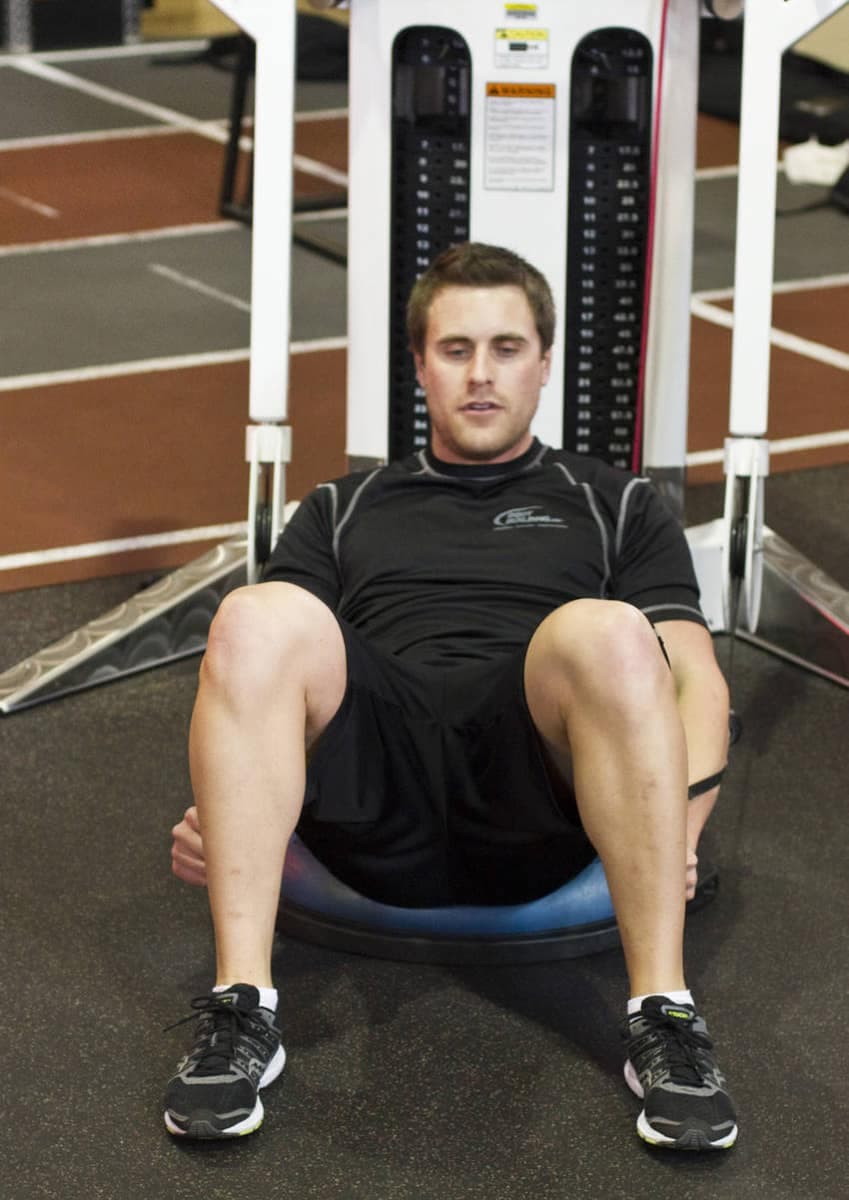
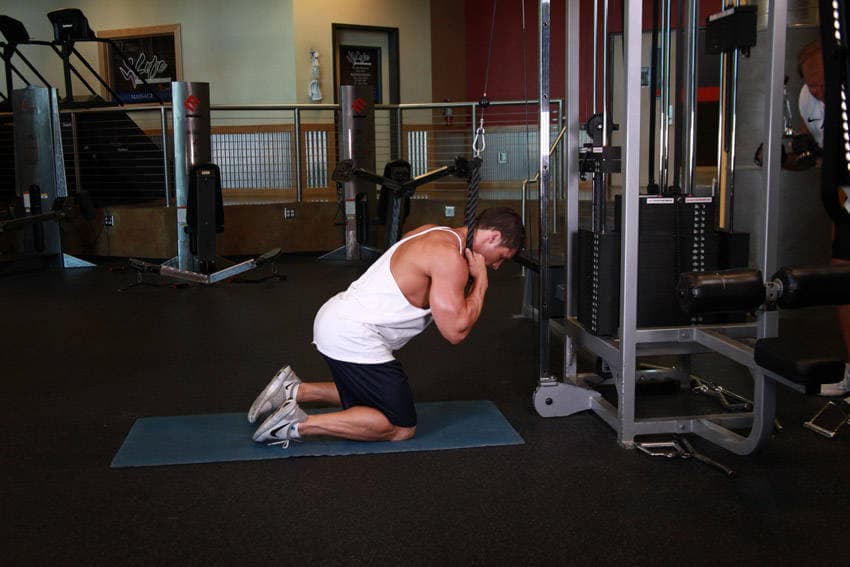
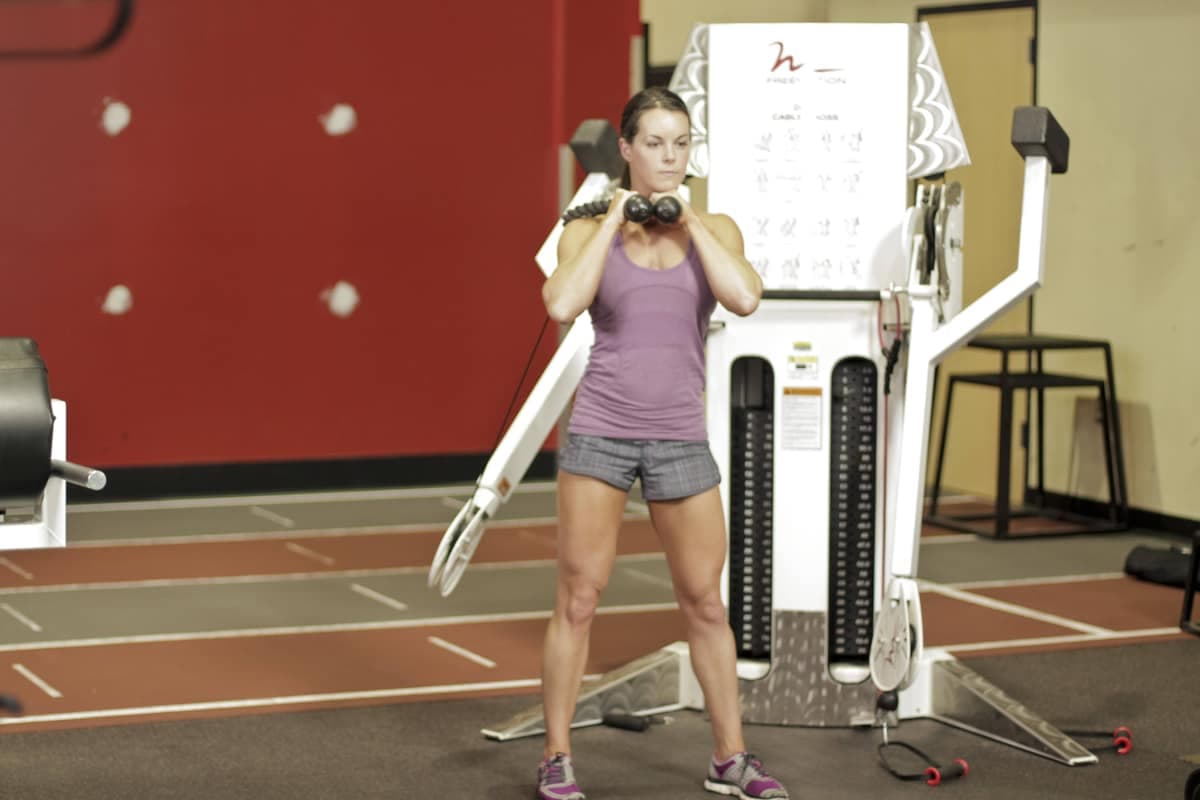
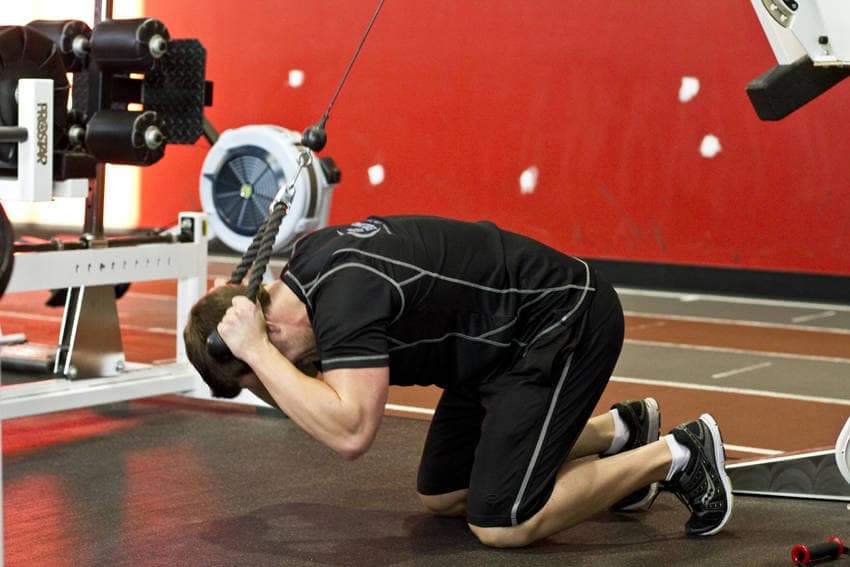
- Connect a rope attachment to a high pulley cable and position a mat on the floor in front of it.
- Grab the rope with both hands and kneel approximately two feet back from the tower.
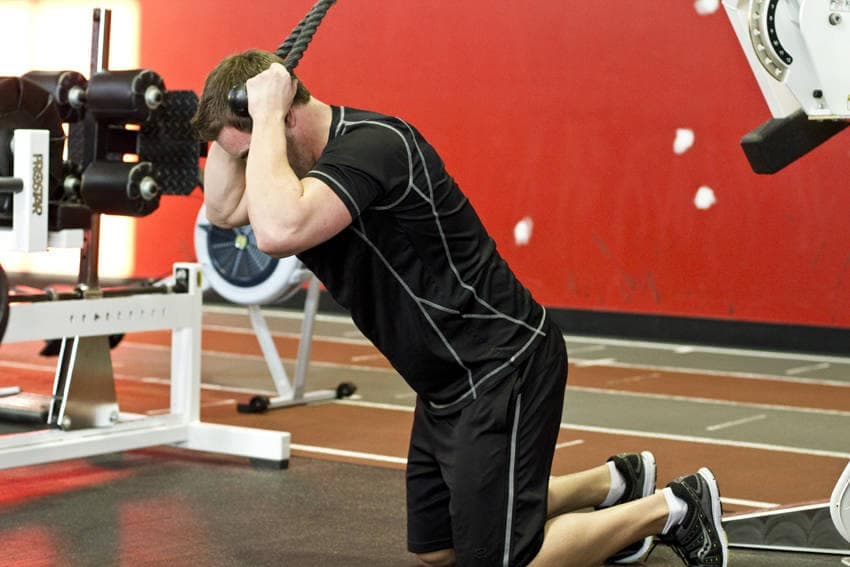
- Position the rope behind your head with your hands by your ears.
- Keep your hands in the same place, contract your abs and pull downward on the rope in a crunching movement until your elbows reach your knees.
- Pause briefly at the bottom and rise up in a slow and controlled manner until you reach the starting position.
- Repeat the same downward movement until you're halfway down, at which time you'll begin rotating one of your elbows to the opposite knee.
- Again, pause briefly at the bottom and rise up in a slow and controlled manner until you reach the starting position.
- Repeat the same movement as before, but alternate the other elbow to the opposite knee.
- Continue this series of movements to failure.
Muscle groups
Primary: Abdominals
Choose a load and range of motion that suit you. The library is not an individual assessment of what you should train.
Images and instructions: free-exercise-db, available under Unlicense.
Understand set effort and session load →
Open training app