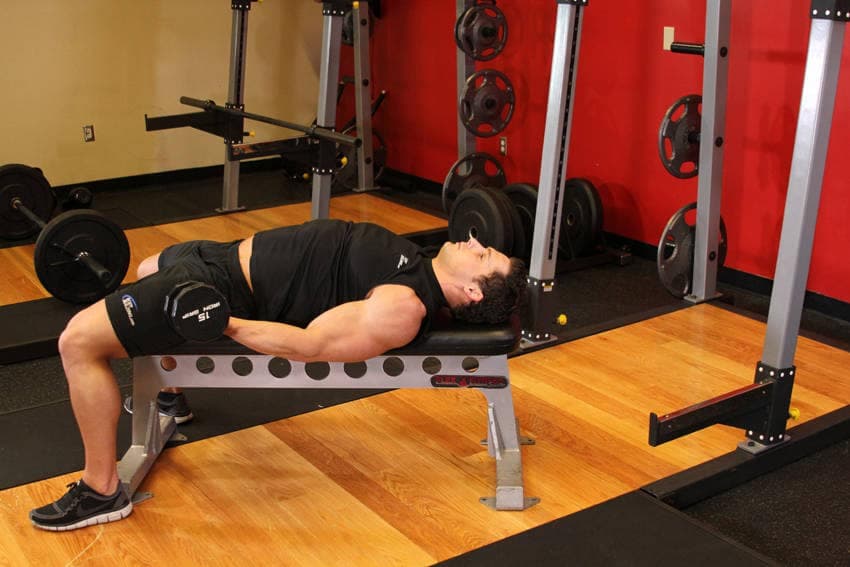
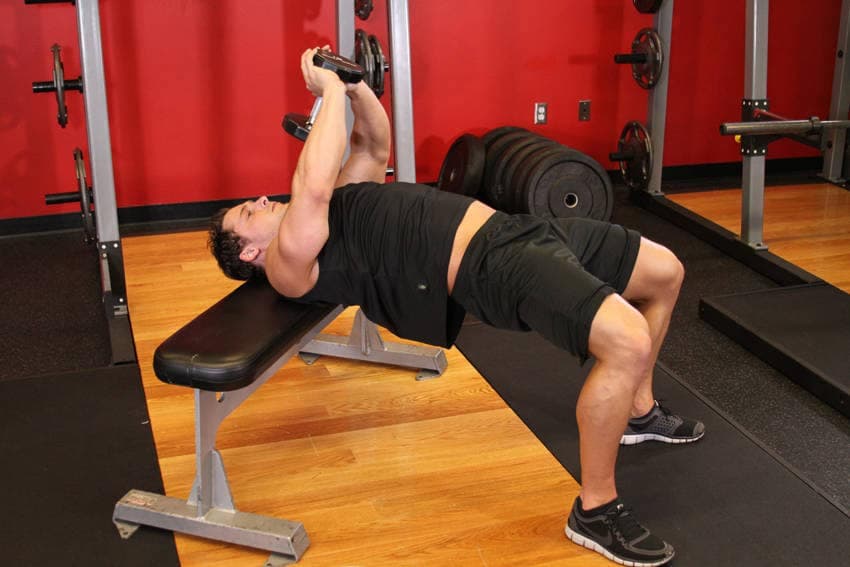
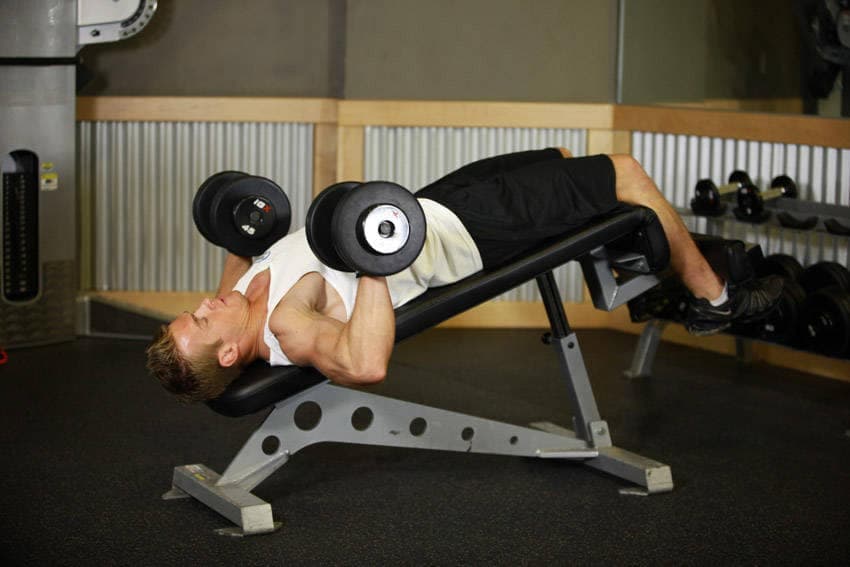
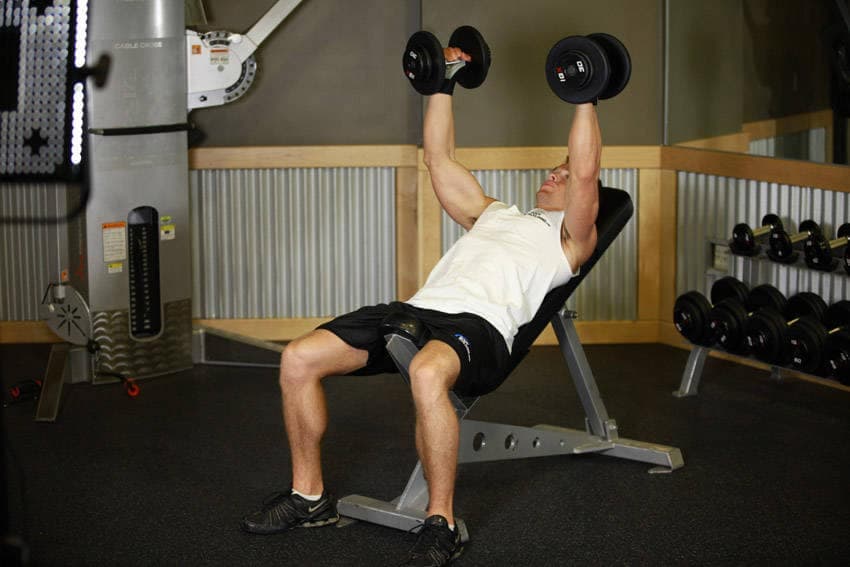
Movement sequence02 frames
The Qantra note
Make the next session comparable
Compare weight and repetitions with a similar bench angle and comfortable range of motion. Note it when either changes.
Log the actual load, completed sets, repetitions and set effort. A heavier set with fewer reps is a different result, not automatically progress. The incline or decline is part of this variation; note it if you change the setup.
Exercise instructions
Original English instructions from free-exercise-db.
- Lie back on an incline bench with a dumbbell on each hand on top of your thighs. The palms of your hand will be facing each other.
- By using your thighs to help you get the dumbbells up, clean the dumbbells one arm at a time so that you can hold them at shoulder width.
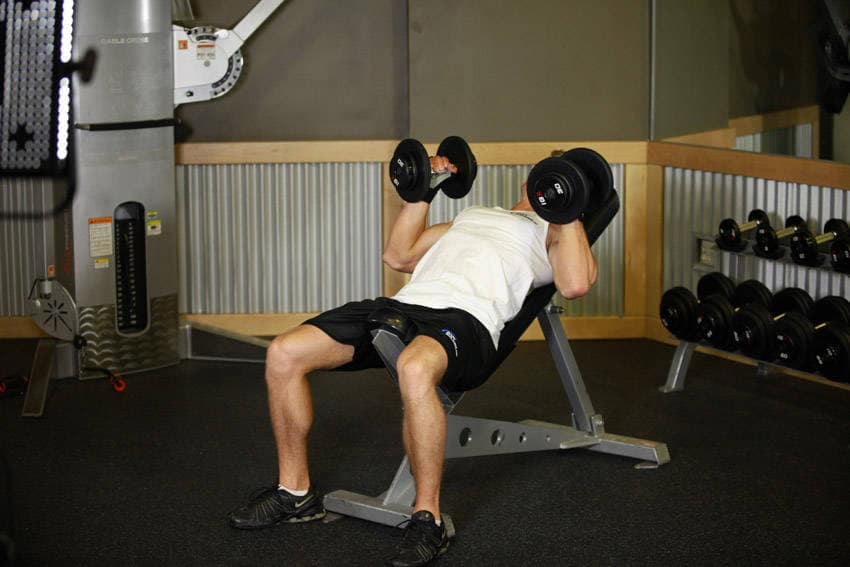
- Once at shoulder width, keep the palms of your hands with a neutral grip (palms facing each other). Keep your elbows flared out with the upper arms in line with the shoulders (perpendicular to the torso) and the elbows bent creating a 90-degree angle between the upper arm and the forearm. This will be your starting position.
- Now bring down the weights slowly to your side as you breathe in. Keep full control of the dumbbells at all times.
- As you breathe out, push the dumbbells up using your pectoral muscles. Lock your arms in the contracted position, hold for a second and then start coming down slowly. Tip: It should take at least twice as long to go down than to come up.
- Repeat the movement for the prescribed amount of repetitions.
- When you are done, place the dumbbells back in your thighs and then on the floor. This is the safest manner to dispose of the dumbbells.
Muscle groups
Primary: Chest
Secondary: Shoulders, Triceps
Choose a load and range of motion that suit you. The library is not an individual assessment of what you should train.
Images and instructions: free-exercise-db, available under Unlicense.
Understand set effort and session load →
Open training app