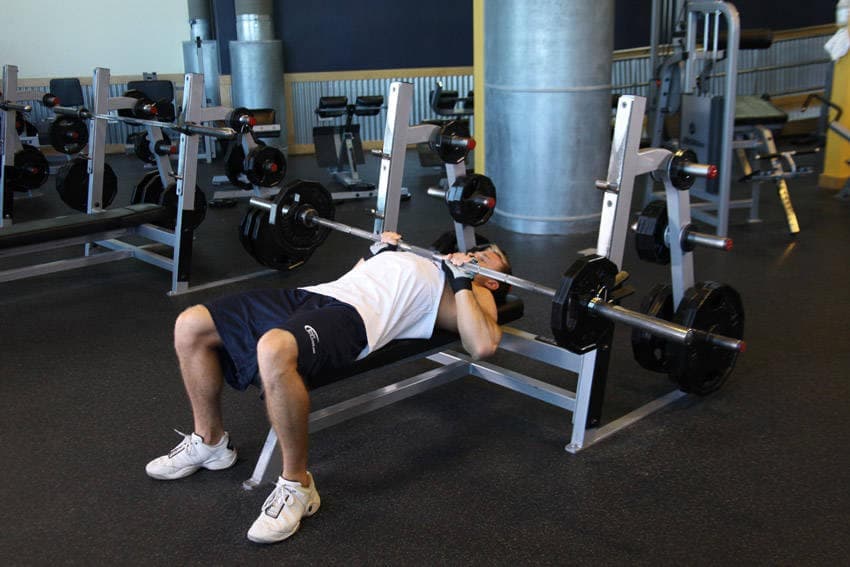
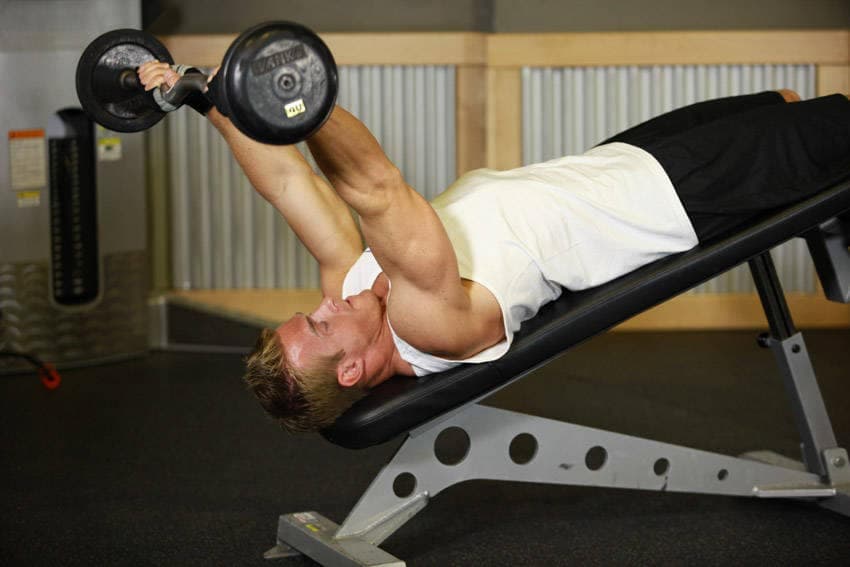
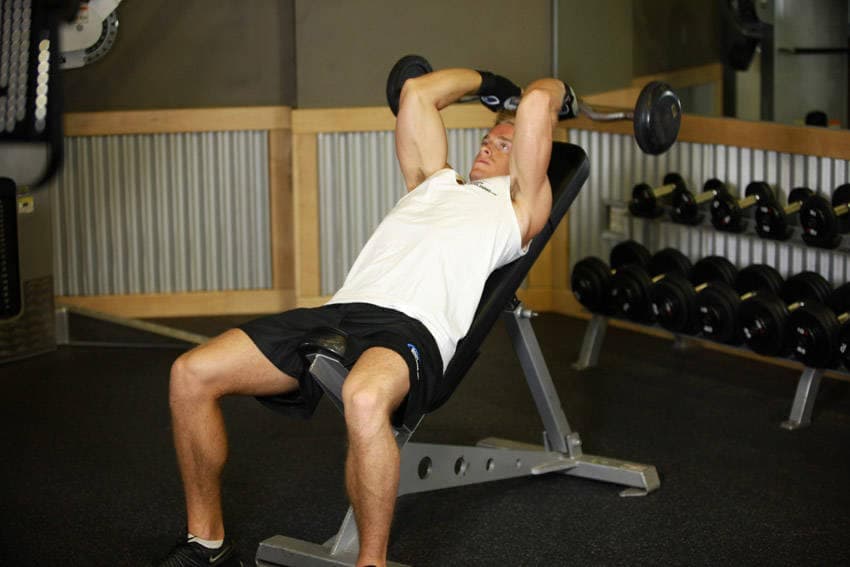
Movement sequence02 frames
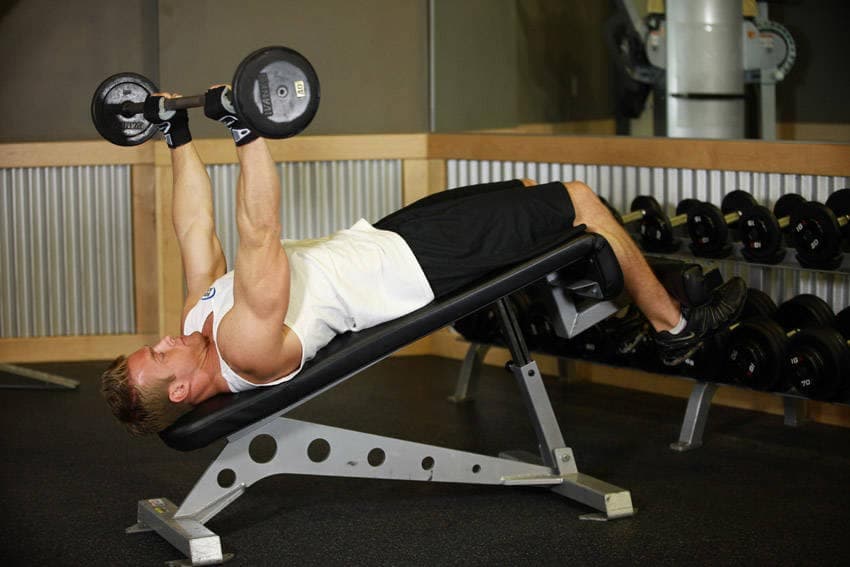
The Qantra note
Make the next session comparable
For arm-extension work, arm position and equipment or support matter when you compare one set with the next.
Log the actual load, completed sets, repetitions and set effort. A heavier set with fewer reps is a different result, not automatically progress. The incline or decline is part of this variation; note it if you change the setup. Grip is part of this variation; note a change before comparing loads.
Exercise instructions
Original English instructions from free-exercise-db.
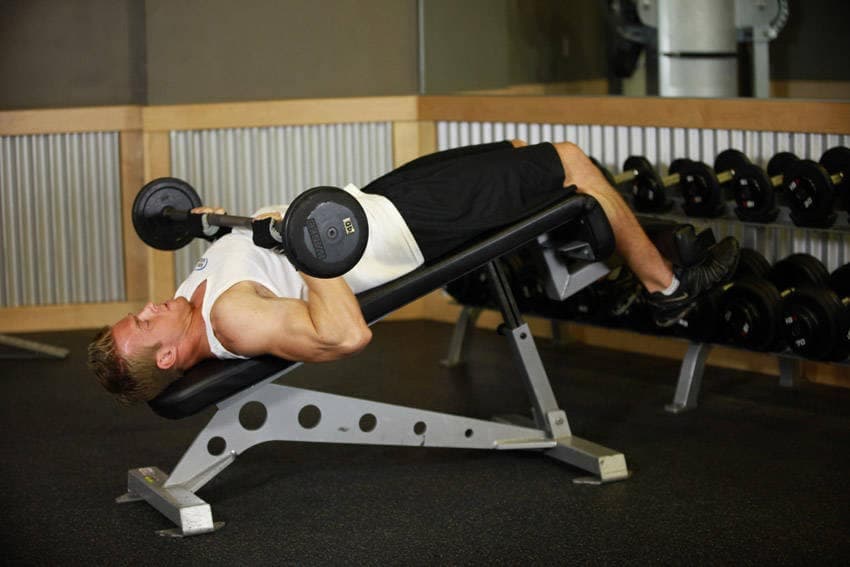
- Secure your legs at the end of the decline bench and slowly lay down on the bench.
- Using a close grip (a grip that is slightly less than shoulder width), lift the bar from the rack and hold it straight over you with your arms locked and elbows in. The arms should be perpendicular to the floor. This will be your starting position. Tip: In order to protect your rotator cuff, it is best if you have a spotter help you lift the barbell off the rack.
- Now lower the bar down to your lower chest as you breathe in. Keep the elbows in as you perform this movement.
- Using the triceps to push the bar back up, press it back to the starting position as you exhale.
- As you breathe in and you keep the upper arms stationary, bring the bar down slowly by moving your forearms in a semicircular motion towards you until you feel the bar slightly touch your forehead. Breathe in as you perform this portion of the movement.
- Lift the bar back to the starting position by contracting the triceps and exhaling.
- Repeat steps 3-6 until the recommended amount of repetitions is performed.
Muscle groups
Primary: Triceps
Secondary: Chest, Shoulders
Choose a load and range of motion that suit you. The library is not an individual assessment of what you should train.
Images and instructions: free-exercise-db, available under Unlicense.
Understand set effort and session load →
Open training app