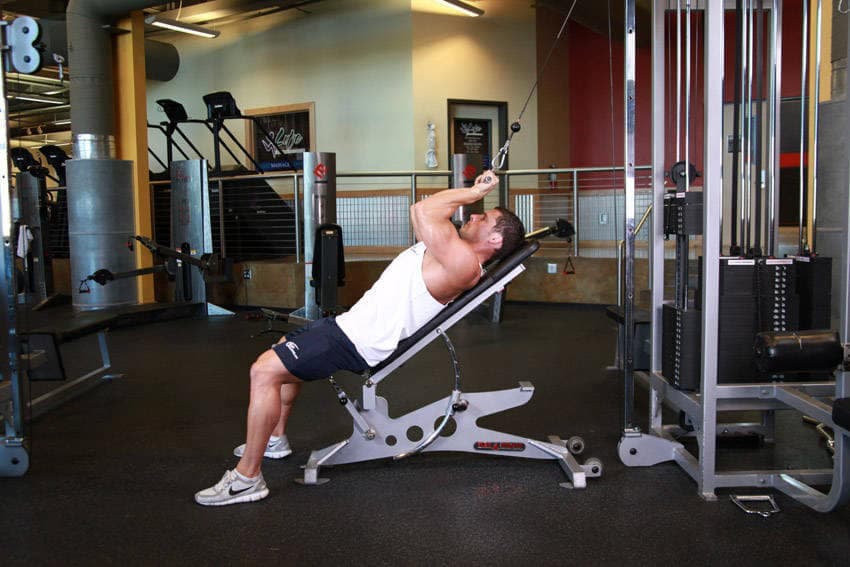
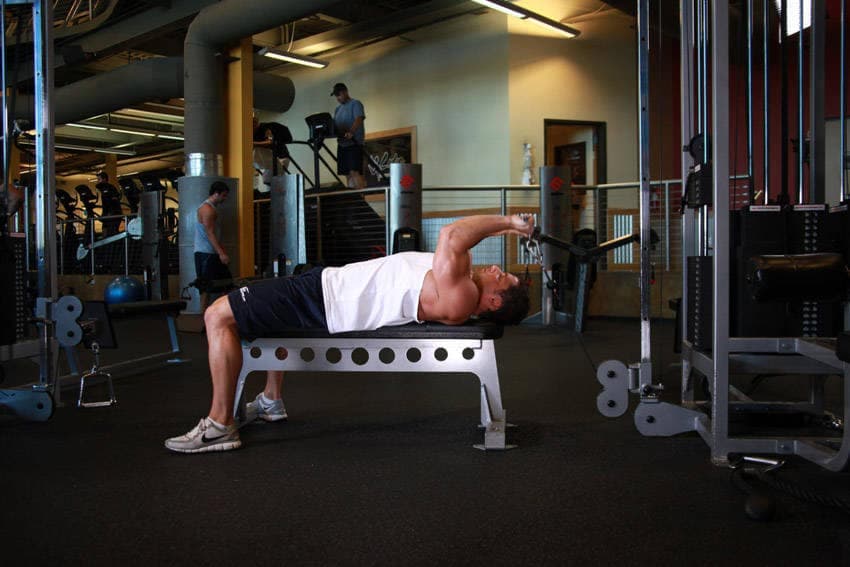
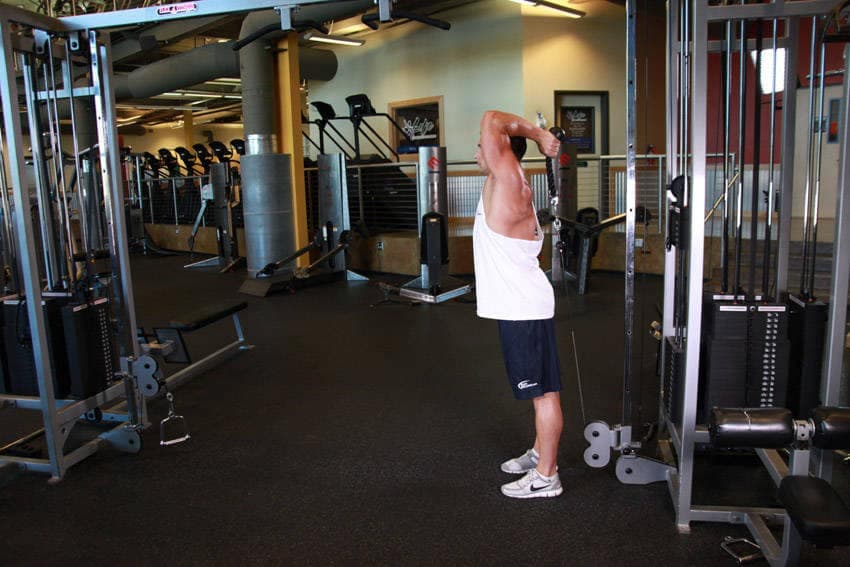
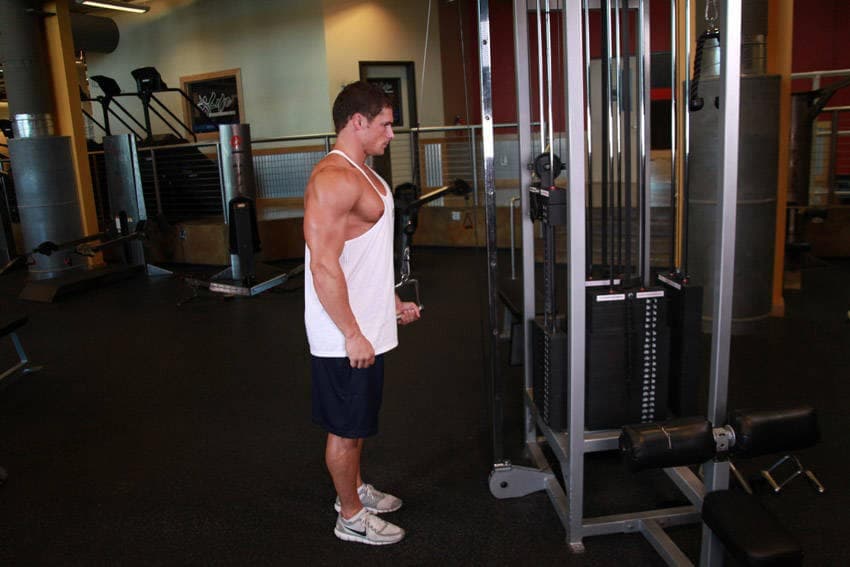
Movement sequence02 frames
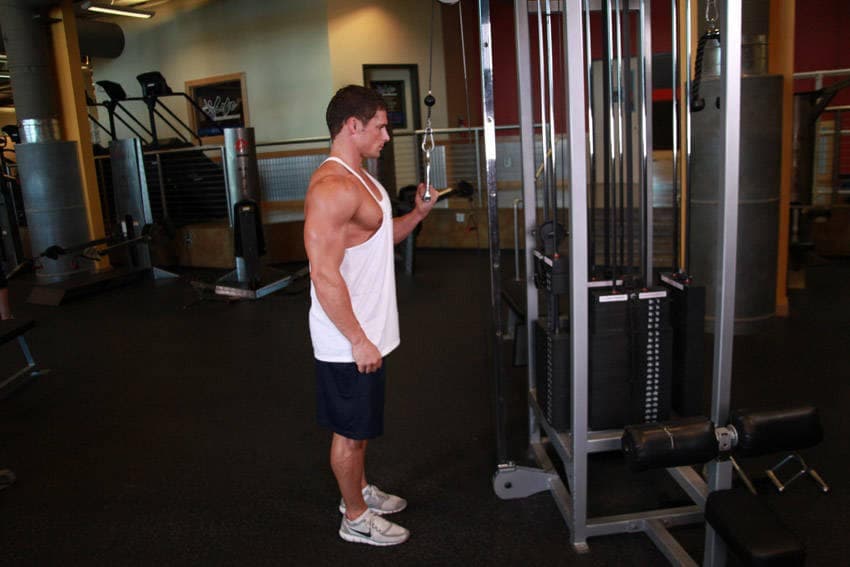
The Qantra note
Make the next session comparable
Small changes in arm position or attachment can change an arm-extension exercise. Note the setup you used.
Log completed sets, repetitions and effort alongside the machine or cable setting; a different station may not be directly comparable. If the sides are trained separately, keep their results separate too.
Exercise instructions
Original English instructions from free-exercise-db.
- With your right hand, grasp a single handle attached to the high-cable pulley using a supinated (underhand; palms facing up) grip. You should be standing directly in front of the weight stack.
- Now pull the handle down so that your upper arm and elbow are locked in to the side of your body. Your upper arm and forearm should form an acute angle (less than 90-degrees). You can keep the other arm by the waist and you can have one leg in front of you and the other one back for better balance. This will be your starting position.
- As you contract the triceps, move the single handle attachment down to your side until your arm is straight. Breathe out as you perform this movement. Tip: Only the forearms should move. Your upper arms should remain stationary at all times.
- Squeeze the triceps and hold for a second in this contracted position.
- Slowly return the handle to the starting position.
- Repeat for the recommended amount of repetitions and then perform the same movement with the other arm.
Muscle groups
Primary: Triceps
Choose a load and range of motion that suit you. The library is not an individual assessment of what you should train.
Images and instructions: free-exercise-db, available under Unlicense.
Understand set effort and session load →
Open training app